
The ancient Athenian potters district and the Delta WASP 40100 Clay printer
Kerameikos was the potters district of ancient Athens. The word ceramics comes from it. A design studio in Thessaloniki called KERAMIK3D chose the name deliberately, which is either a statement about continuity or about cheek, probably both.
Theodore Samaras founded the studio after spending a decade as an architectural visualiser, rendering spaces for clients who would then put furniture in them. At some point the logical next step became obvious: design the objects that go into the spaces rather than the images of them. The studio uses a Delta WASP 40100 Clay printer to produce ceramic lighting, furniture, and objects — the same clay and firing process that has been used since antiquity, shaped by additive manufacturing software rather than hands on a wheel.
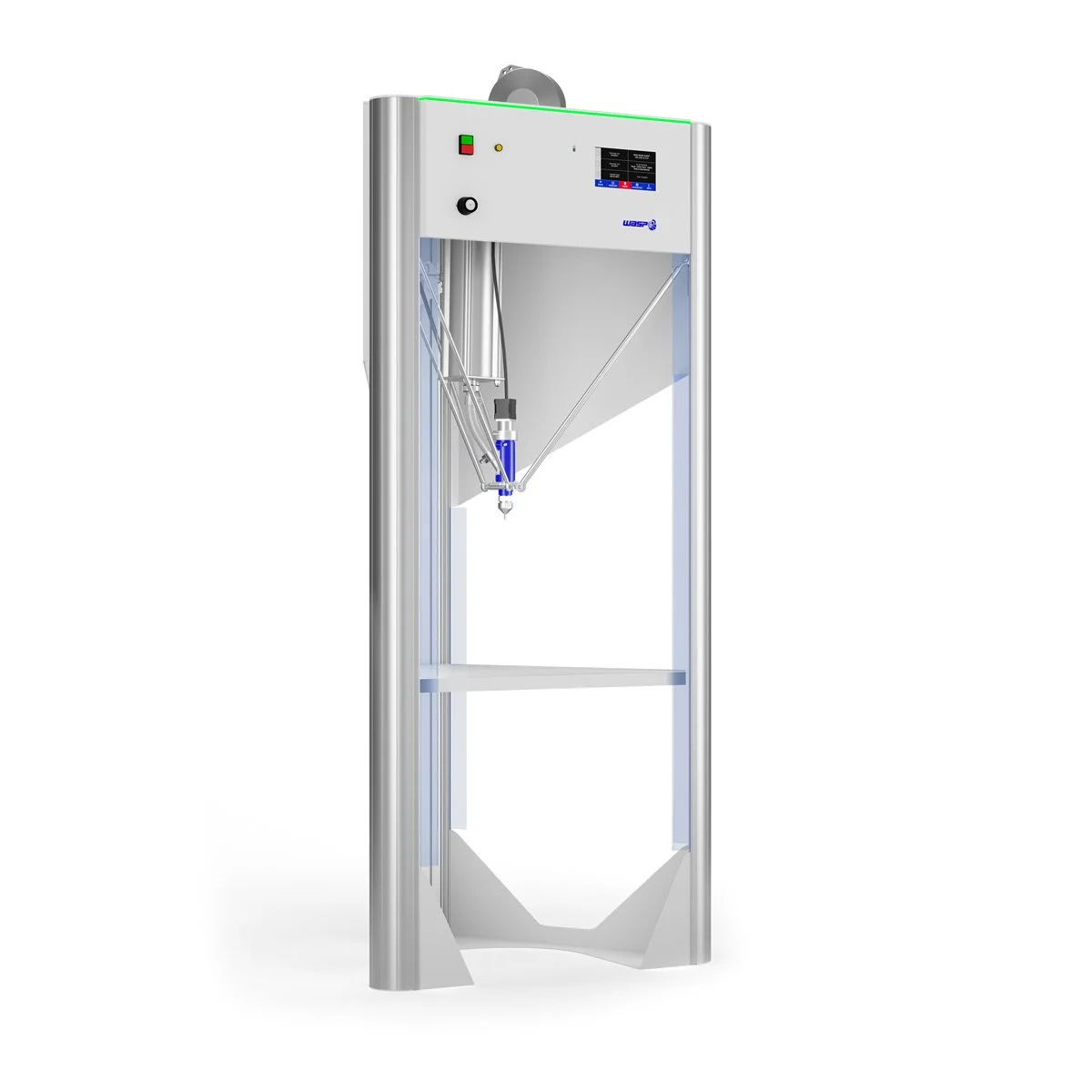
wasp clay printer
The practical difference between 3D-printed clay and hand-thrown clay is not that one is better. It is that they are different in specific ways that matter for specific applications. Hand throwing produces objects shaped by the relationship between hands and spinning clay. The variation is human, the symmetry is centred, the surface is continuous. Slip-casting allows repetition but constrains internal geometry and wall thickness. Additive manufacturing builds the object layer by layer from a digital file, which means wall thickness can vary across a single piece, internal geometries that throwing cannot reach are achievable, and surface texture is a direct product of the printing process itself. The layer structure creates a topography that interacts with light differently at different times of day. A KERAMIK3D ceiling light at noon and at 7pm are the same object behaving differently, which is not something a smooth glaze can do.
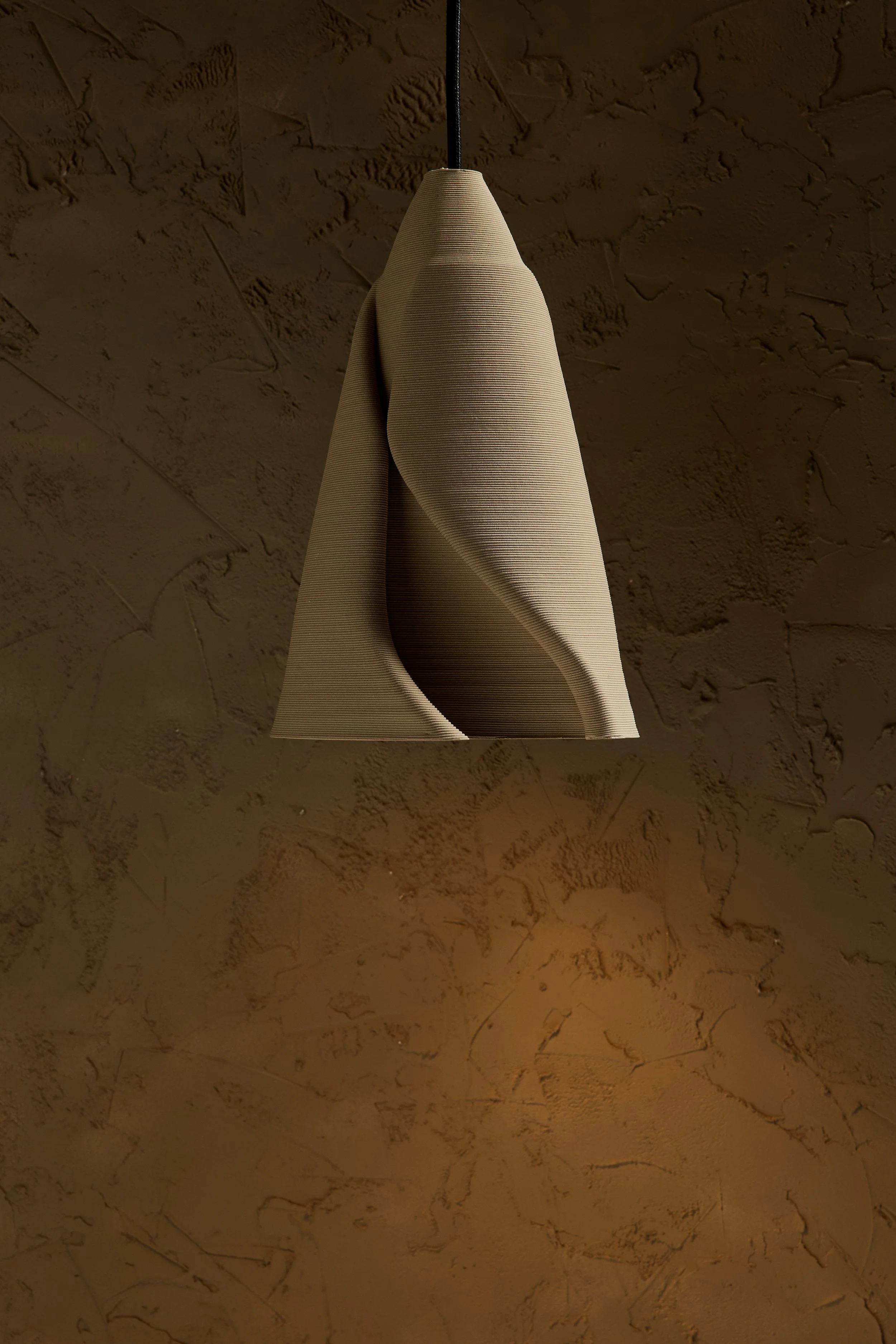
the flume pendant
The Flume ceiling light takes its form from the topography of waterfalls and natural drainage channels. The Gourd table lamp is a bulbous clay form, 31 centimetres tall and 23 centimetres in diameter, with a 2 to 3 week production window per piece. Both are ceramic throughout. Both are produced in Thessaloniki. Both can be specified for interior residential or hospitality projects.
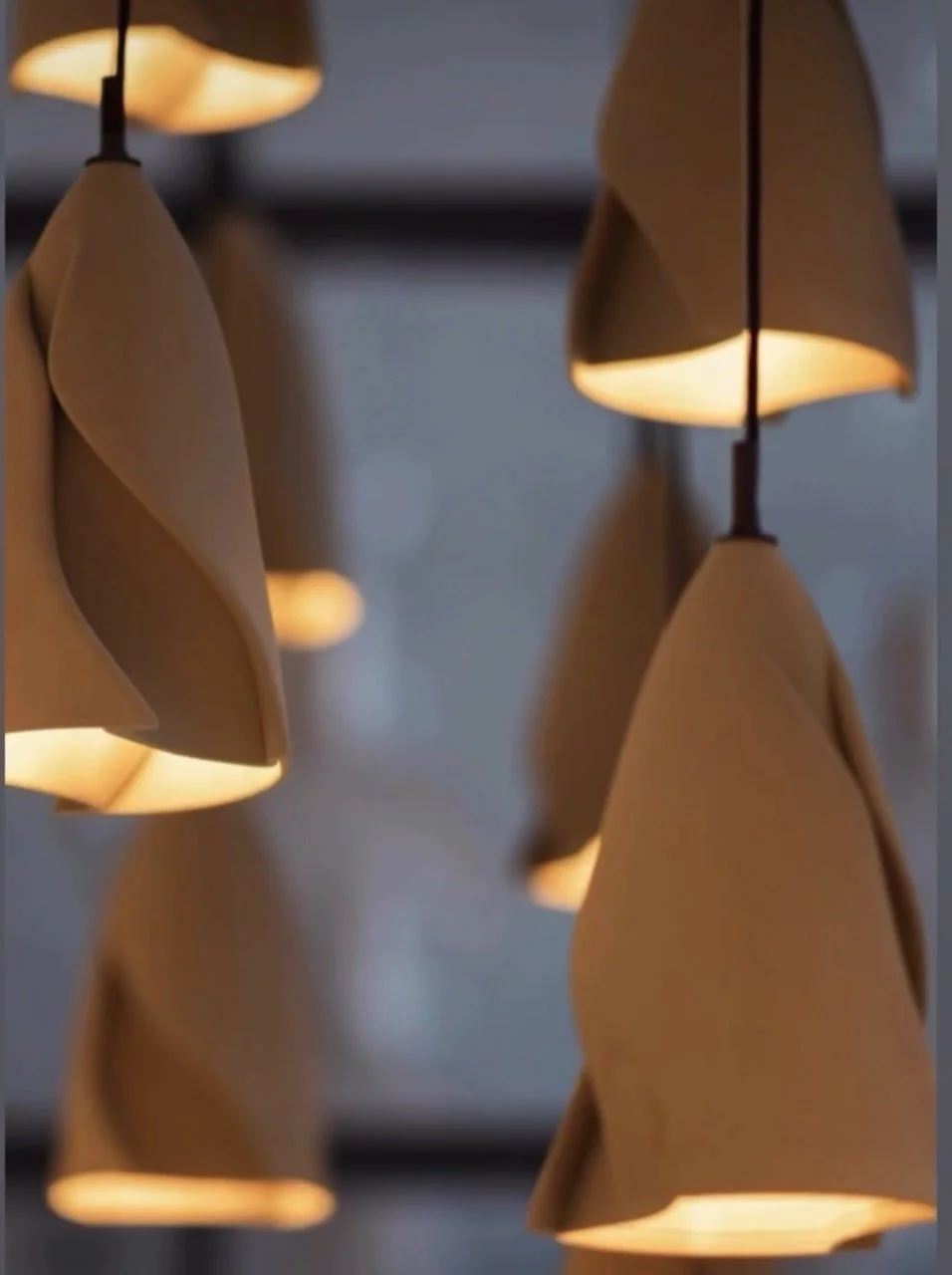
The studio produces lighting and objects using the same material and the same process, which gives a designer a compositional tool that is harder to find than it sounds: material continuity across a table object and a ceiling fixture without the pieces looking like a matched set. One maker, one clay body, different forms. The room gains a consistent material character without announcing it.
For interior designers working on projects in Canada who are trying to specify objects and lighting at a level above mass production without entering indefinite-timeline bespoke territory, KERAMIK3D sits in a specific and useful place. The lead times are real. The production is consistent. The sourcing problem it solves is a real sourcing problem. KERAMIK3D is available in Canada and the United States through Fabryka Studios.