
The Case for an Outdoor Space That Requires Nothing From You
Every element added to an outdoor environment is a commitment that extends well past the season it was installed in, and most outdoor spaces get specified without anyone doing that accounting honestly.
A pergola goes in and needs staining on a two-year cycle. Lighting gets added and needs sealed connections and periodic fixture replacement. An outdoor kitchen follows with stone that needs resealing and appliances that need winterizing. By the time the terrace is complete it has generated more recurring maintenance than the interior of the house it belongs to, and every spring starts with several weeks of remediation before the space can actually be used. This pattern is so common that it's stopped registering as a design failure, which is the more interesting problem.
Outdoor living as a category got sold largely as an extension of interior living, which meant importing interior complexity into an environment that degrades materials on a faster and less forgiving schedule. The question that rarely gets asked early enough in a project is not what should this space have but what should this space require, and those are genuinely different questions that lead to genuinely different outcomes.
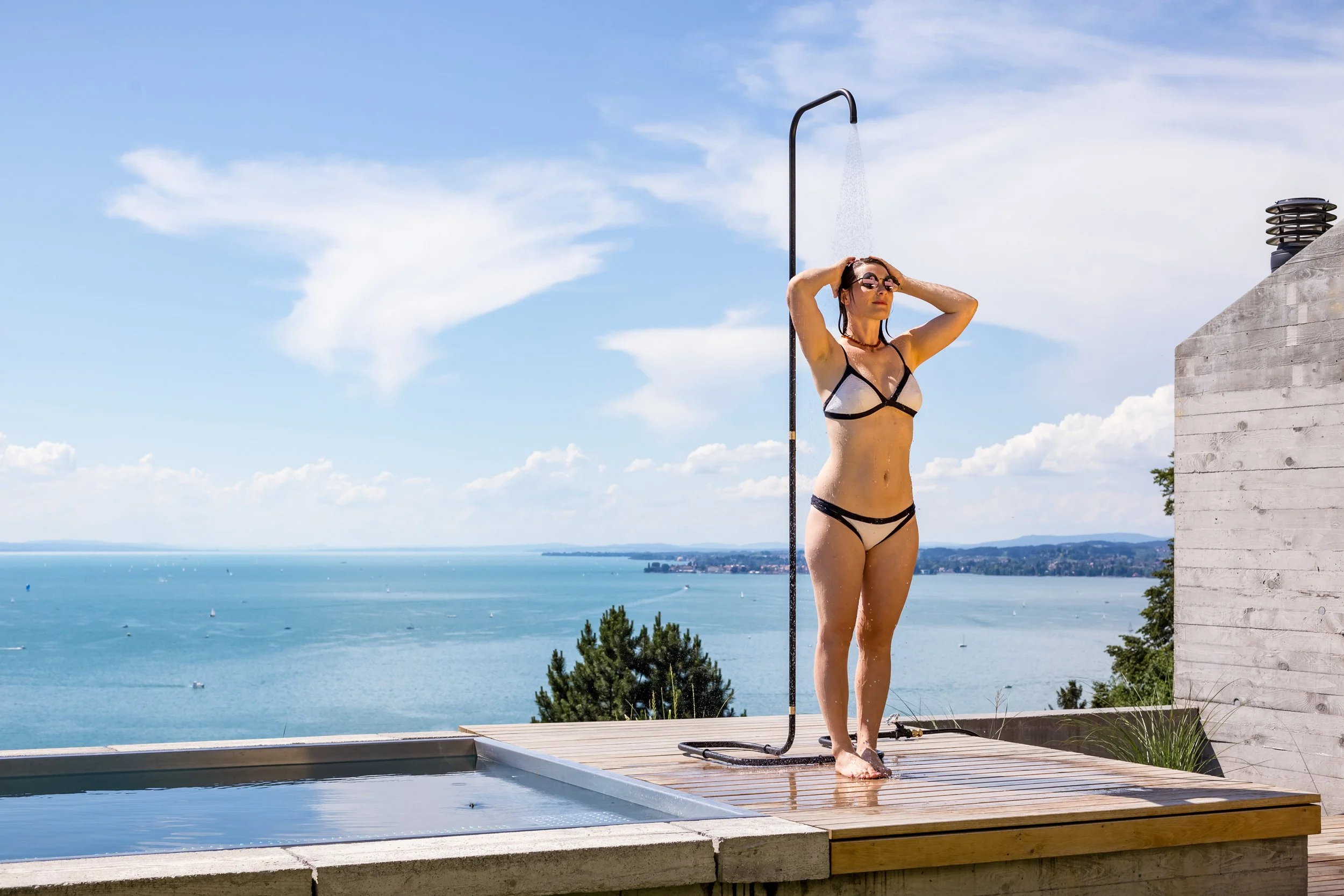
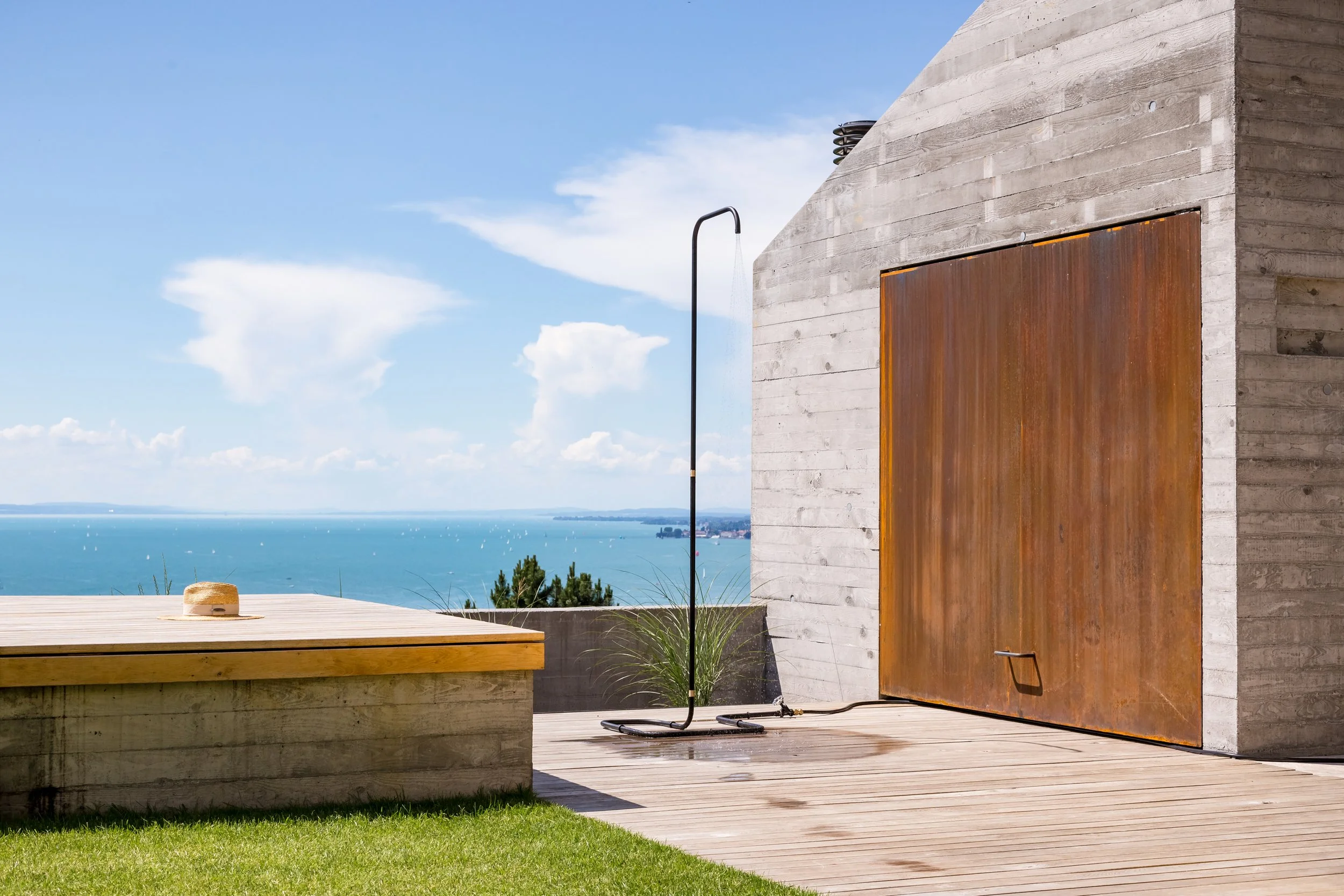
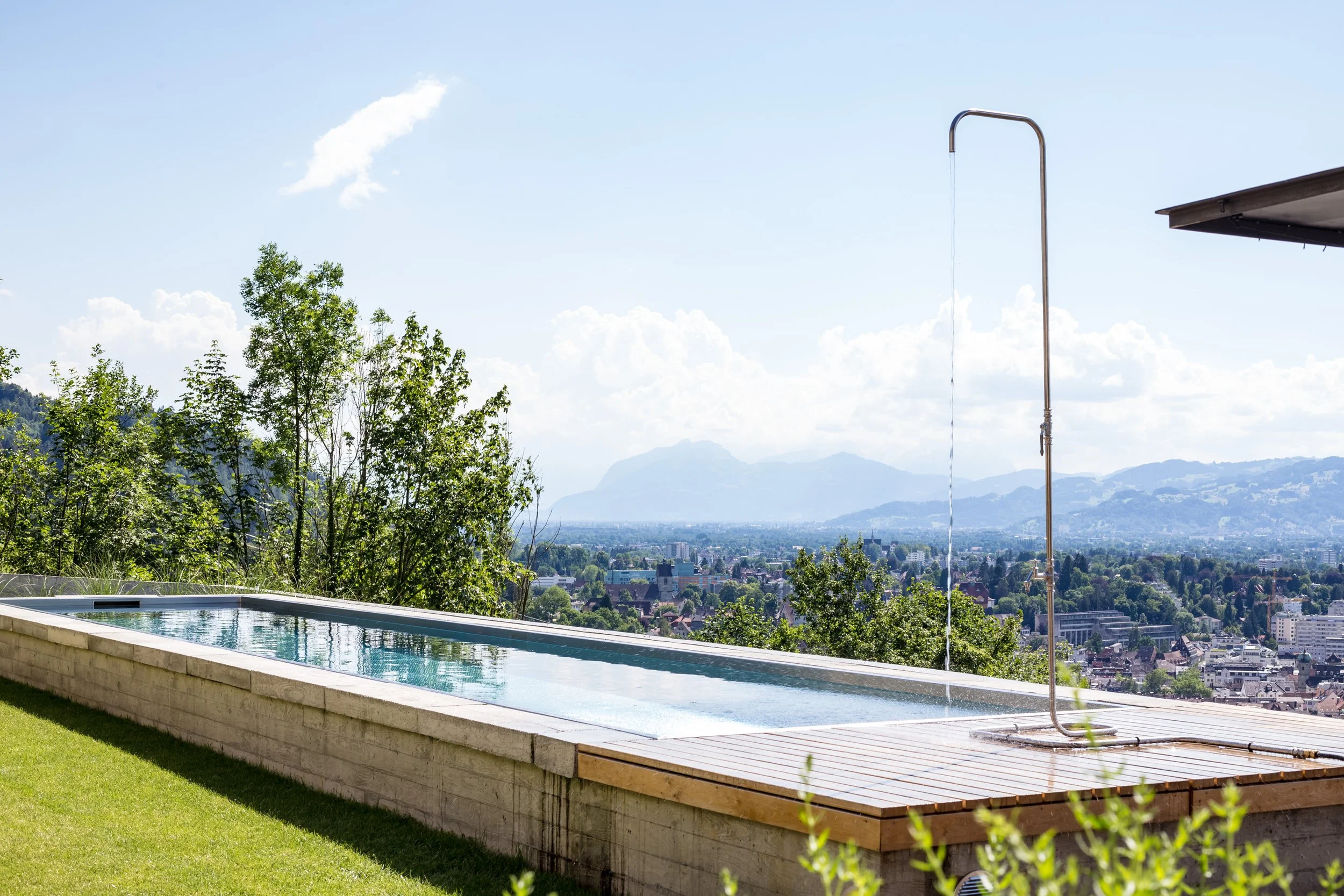
The spaces that get used most reliably tend to be the simpler ones. Fewer systems, fewer surfaces, materials chosen for what they do in weather rather than for how they read in a catalog. Tarantik & Egger make outdoor showers in Germany from stainless steel with powder-coated finishes and a hose-fed installation that requires no infrastructure beyond a water connection. The reason that's worth noting is that it represents an entire category of outdoor addition that solves a real problem without creating new ones. No electrical work, no drainage system, no annual maintenance protocol. It goes in, it works, it continues working. That outcome is harder to achieve than it looks and rarer than it should be.
Reduction in outdoor design is an operational position, not an aesthetic one. The designers who understand this specify less and specify it better, and the spaces they produce tend to feel more intentional and cost less to own over time. The goal is a terrace that works the first weekend of May without anyone having to do anything first.